Futura Time Machine: Porto. A Journey to 2050
By Futura Foundation

Ask anyone to picture the future and their mind fills with flying cars and glass towers. Cities that arrive fully formed and faintly sterile.
But the real future is more interesting.
It inherits the streets we already have, but also the people who live among them: what we agree is worth keeping, what we argue needs to change, and the conversations that happen in between.
On July 10th, around a hundred people who live, work, study and, above all, love Porto came to Futura’s Time Machine to imagine their beloved city in 2050.
Because loving a place doesn’t mean leaving it unchanged. Sometimes it means challenging what it could become.
Imagining 2050 isn't about escaping 2026. It's about seeing the present differently.
The work began that morning with the Futura Fellows, a group of Portuguese women, and the team from Transformative Times. Together, they learned to question assumptions, explore plausible futures, then work backwards to make them happen.
By afternoon, the doors opened to the city:
What would a greener, bluer Porto look like in 2050 — and what would have to start changing now to get there?
Then the lights dropped.
A burst of static.
"This is your captain speaking…"
A rocket launch echoed through the hall.
Flight FTM 001 had departed. Destination: 2050.
First stop: a motorway.
A map can hide the truth of travel.
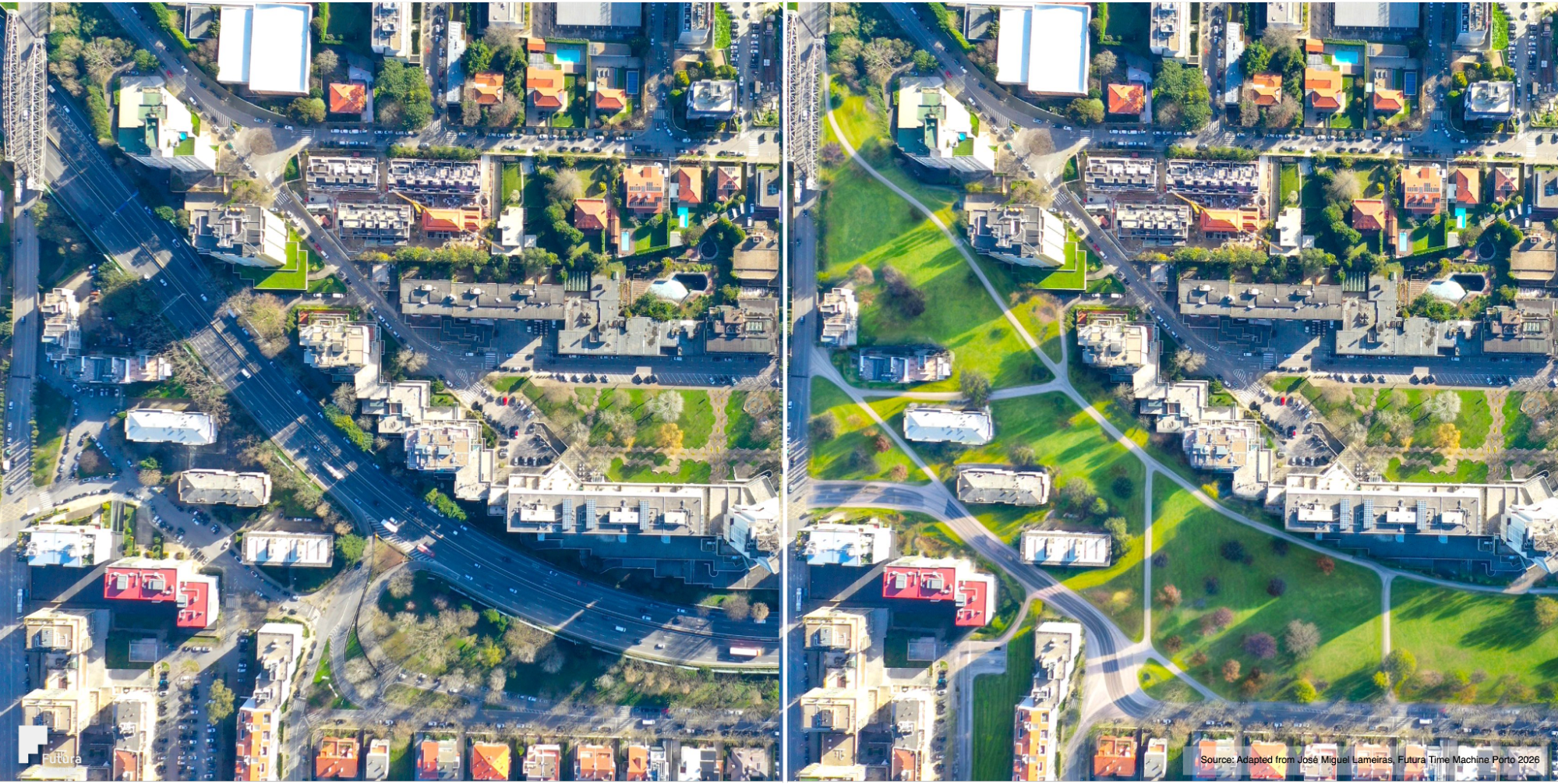
Two neighbourhoods can sit nine minutes apart and still cost you an hour — not because of hills, but because of the VCI, the motorway that cuts through Porto.
For decades, the issue was how to get more cars through an already crowded road.
Prof. José Miguel Lameiras asked a different question:
What if, instead of moving more cars, it could connect people?
His answer was cerzir: to mend what has been divided by working with what’s left.
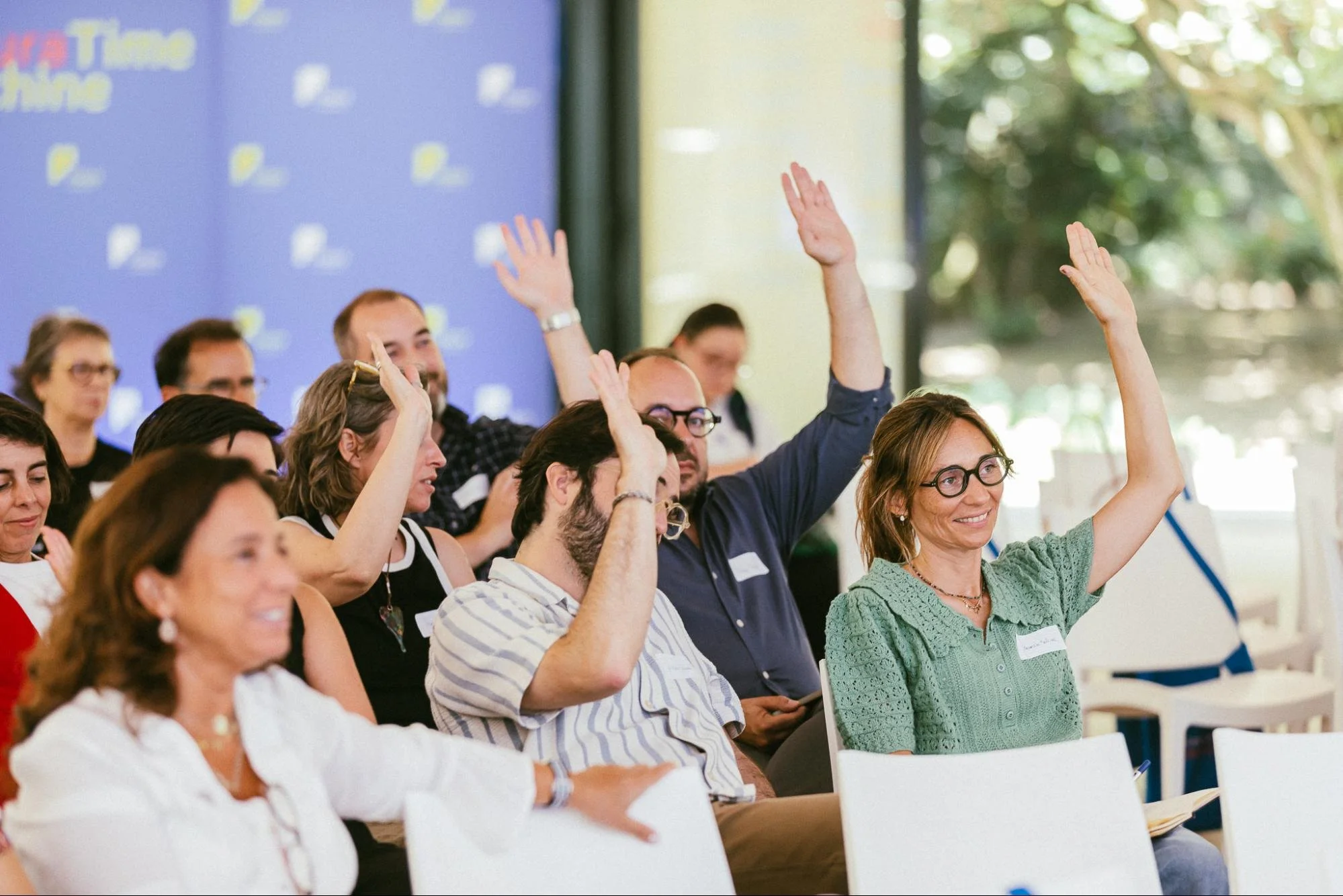
Cerzir is now taking shape across several areas, with proposals for green corridors, cycle lanes and dedicated public transport to reconnect divided neighbourhoods.And the room responded. Hands went up. Questions followed.
The journey was becoming a conversation.
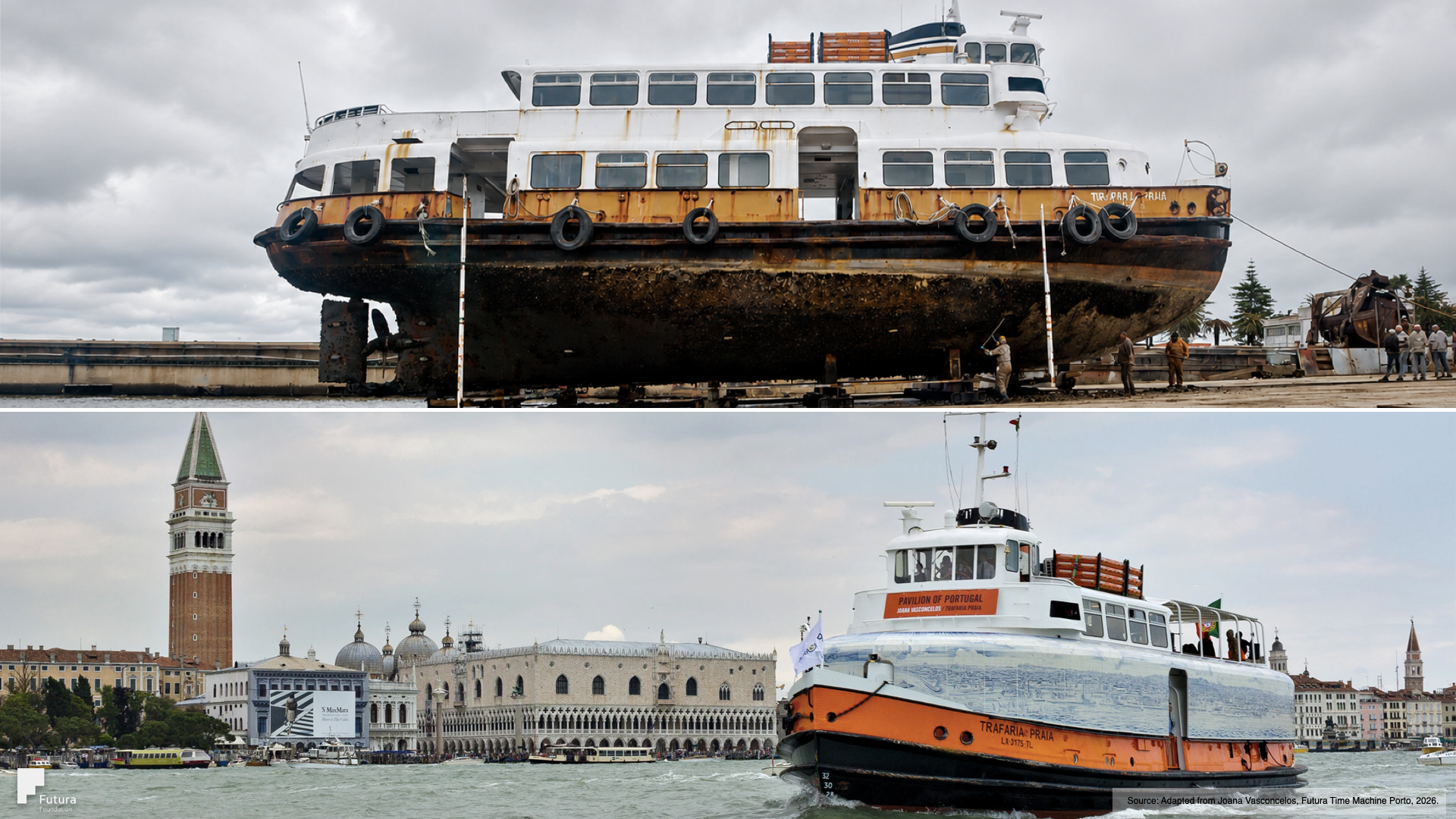
Then Joana Vasconcelos brought us a boat.
A retired, rusting one.
Trafaria Praia carried commuters across the Tagus until 2011.
Two years later, it became Portugal’s pavilion at the Venice Biennale.
Its hull was covered in blue-and-white portuguese tiling. Textiles and light transformed the interior. Unlike a conventional pavilion, it could move.
Behind Trafaria Praia were the tilemakers, textile workers, technicians and institutions needed to make an improbable idea sail.
And the boat wasn’t an exception.
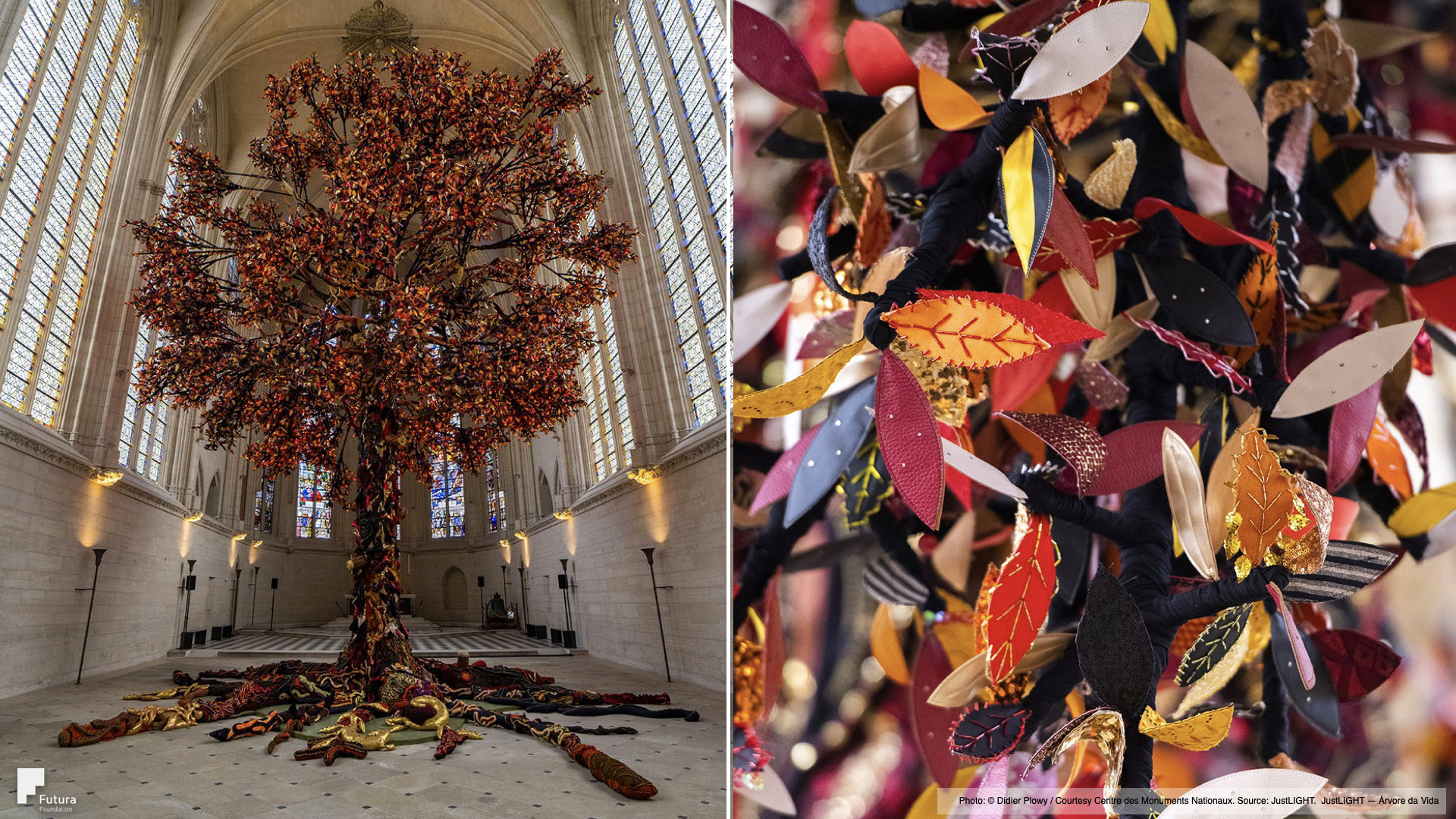
Tree of Life rises nearly fifteen metres through the chapel, carrying more than 140,000 embroidered leaves.
From across the chapel, you see a tree. Up close, you see the work of hundreds of hands.
"An artist," Joana said, "only exists for as long as the community believes."
Day one presentations ended. The conversations didn’t. They carried on over coffee, between chairs and into the working groups. What had started on stage was now moving around the room.
Day two began with mushrooms.
They have a certain reputation for taking people places. João Kopke had just the right destination: the future.
Not mushrooms exactly, but mycelium — the almost invisible web of fungal filaments beneath the forest floor, "a kind of internet of the forest."
At Mykor, in the Alentejo, waste from other industries — straw, agricultural leftovers, even sludge from paper production — becomes food for mycelium. It grows through the mixture and binds it together.
What other industries discard becomes insulation for the structures that shelter us.
Kopke had another example, this time from Braga. A pond created in Parque do Picoto had begun attracting life of its own: amphibians, insects and other species.
And then came the fish.
Mar Menor is Europe’s largest saltwater lagoon, a sweep of shallow blue on Spain’s Mediterranean coast. People have built their lives around it for generations — fishing its waters, settling its shores, returning to it.
This wasn't nature somewhere else. It was home.
And on paper, it was protected. Ramsar. Natura 2000. Regional protections, layer upon layer.
Then, in 2019, thousands of dead fish and crustaceans washed onto its shores.
The legal protections were all still there. The living lagoon was disappearing anyway.
Teresa Vicente brought a difficult question into the room:
How can something be protected and still be allowed to die?
Her answer meant changing the paradigm altogether: give Mar Menor legal rights of its own.
But changing the law meant first convincing people.
And people came!
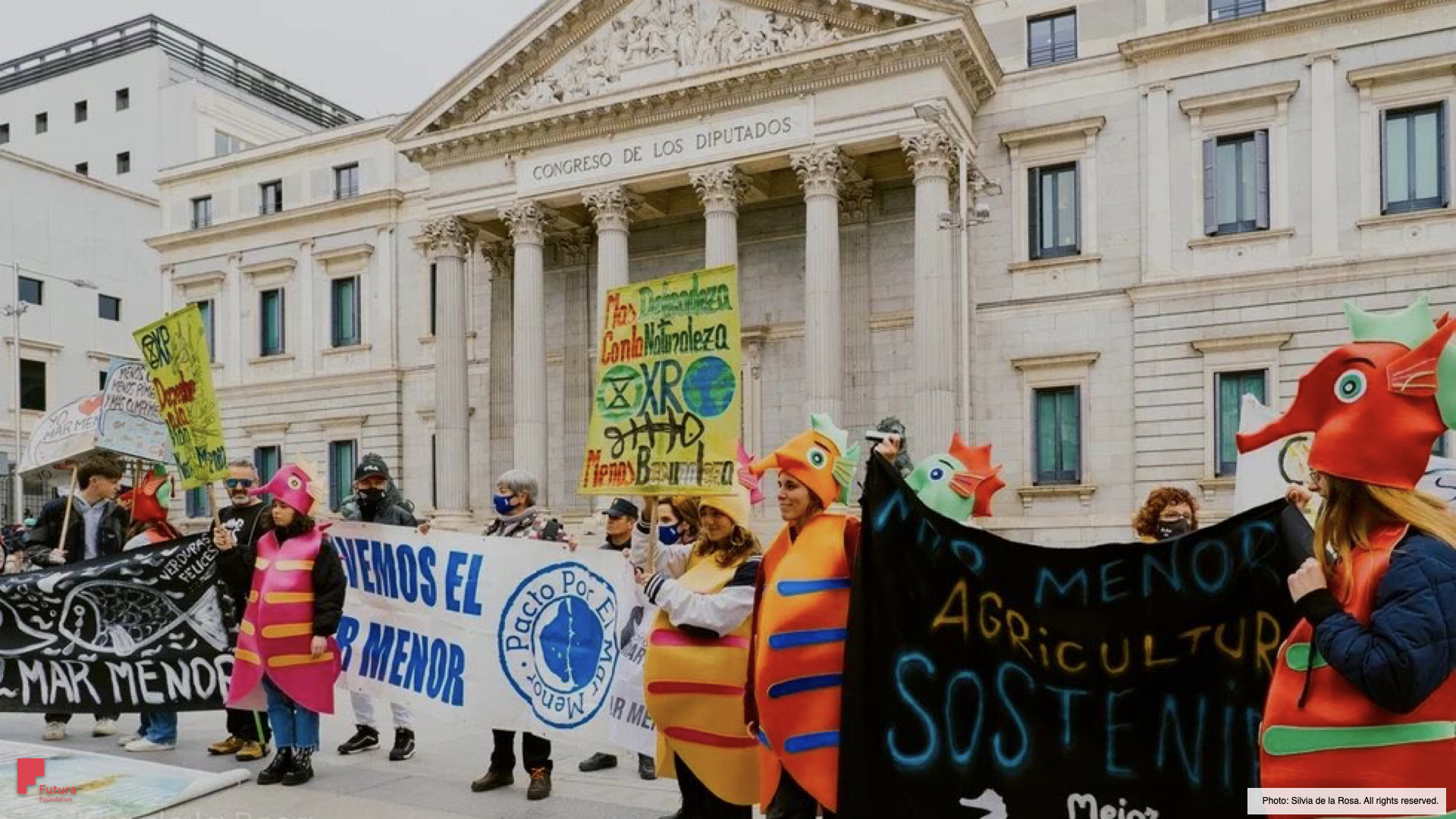
They marched. Formed human chains. Some dressed as the creatures they were fighting for: fish, shrimp, seahorses, lobsters.
The citizen initiative needed 500,000 signatures. 639,286 people signed.
In 2022, Mar Menor became the first ecosystem in Europe recognised with legal personality and rights of its own.
Somewhere across those two days of the Time Machine, the question in the room had changed.
The speakers had asked a hundred people to reconsider what seemed settled: a motorway could connect rather than divide. An old boat could begin again. Waste could become part of a home. A lagoon could have rights of its own.
By the end, the direction of the asking had reversed.
The room was no longer being asked "What did you think?"
It was being asked "What about here?"
The final session made it real.
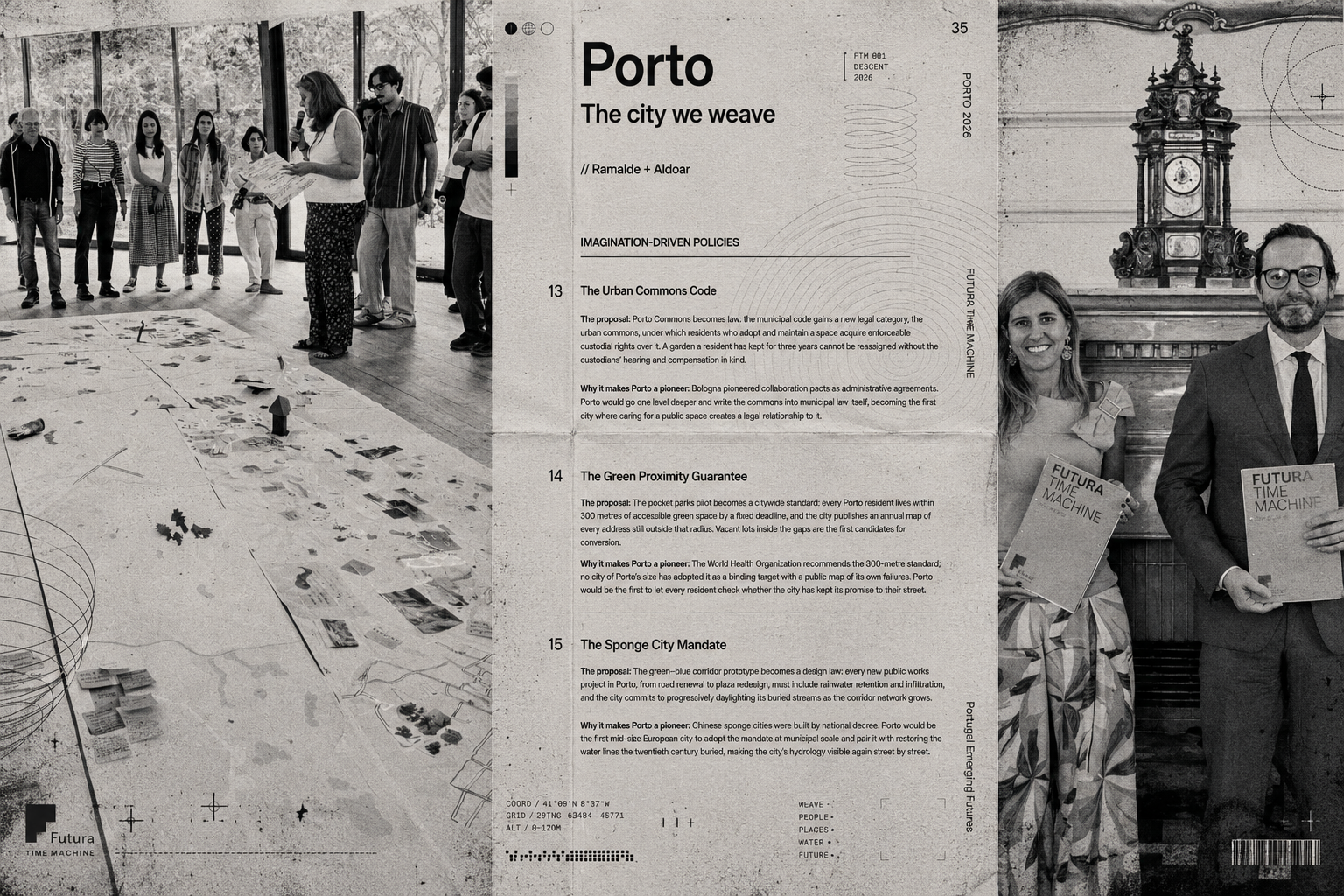
O Porto que queremos em 2050 — the Porto we want in 2050 — began with a collective map of the city, waiting to be filled.
Two days of questions brought home: what could change in Porto, and where do we begin?
What have we learned to accept as inevitable? What should be preserved? What should change? What could begin now?
Around the map, the hundred people who had spent two days listening, asking and arguing began to propose.
Bring Porto’s hidden rivers back to the surface. Plant fruit trees for neighbourhoods to tend and harvest. Give the city’s green and blue spaces legal rights of their own.
And the map didn’t stay in the room. It was made to travel — to Porto City Hall and the University of Porto — carrying those proposals to the people with the means to act on them.
The Time Machine was nearing an end when Ana Bacalhau took the stage. Between songs, she connected familiar lyrics to the journey that had just begun.
Flight FTM 001 had begun its descent. Destination: 2026.
Outside, Porto was exactly where we had left it.
The VCI was still full of cars. The streets hadn’t moved.
But on a map inside Círculo do Porto were a hundred people’s answers to a different question:
What if it could?
Warmly,
The Futura Team
The Time Machine travels next to Coimbra, on October 9th. Registration is open: Join us!
Friends of Futura featured in this article:
José Miguel Lameiras:
Web https://urbinat.ces.uc.pt/people/jose-miguel-lameiras/
Joana Vasconcelos:
Web https://www.joanavasconcelos.com/en
Teresa Vicente & Mar menor
YouTube https://www.youtube.com/watch?v=blO5Gh4dOF0
Ana Bacalhau:
YouTube www.youtube.com/@AnaBacalhauOficial
Instagram instagram.com/anabacalhau/
Facebook facebook.com/AnaBacalhauOficial
João Kopke:
YouTube https://www.youtube.com/@joaokopke8918
Instagram @joaokopke
Transformative Times
Eager for more?
Check Time Machine Porto event’s speakers and activities
Walk & Talk: Explore Porto’s green and blue spaces
https://www.futurafoundation.org/time-machine-portoJoão Kopke: How houses made of mushrooms could change construction forever
https://www.youtube.com/watch?v=nizyF1UyNIsTeresa Vicente & Mar Menor: Europe’s first ecosystem with legal personhood
https://www.boell.de/en/2025/02/05/mar-menor-europes-first-ecosystem-legal-personhoodYouTube - Teresa Vicente, 2024 Goldman Environmental Prize, Spain